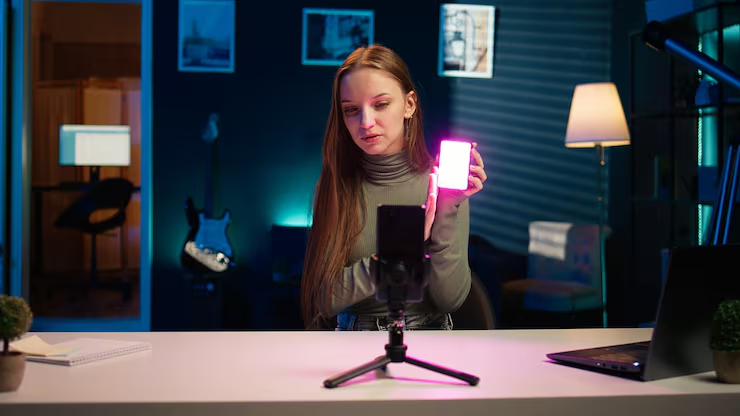
Türk Idla begins not on a stage, or inside a recording studio, but on a phone screen glowing late at night—somewhere between a crowded Istanbul apartment, a quiet Anatolian town, and the infinite scroll of TikTok. It starts with a young person pressing “record,” stitching together music, visuals, fashion, memory, and mood, and offering it to the algorithm not as a polished celebrity but as self. What unfolds from that simple gesture is not a trend in the shallow sense, but a cultural event: a distinctly Turkish reimagining of what it means to be seen, heard, and remembered in the digital age.
In recent years, Türk Idla has emerged as a powerful digital phenomenon across Turkey’s social platforms, appearing in trending hashtags, youth forums, pop-culture essays, and everyday conversations about identity and creativity. The term fuses “Türk” with “idol,” but it resists the traditional meaning of either. It does not point to a single person or genre. Instead, it names a collective impulse—a movement in which young creators assert individuality while remaining deeply anchored in Turkish cultural codes, language, humor, and emotional registers.
This is not about fleeting virality. It is about authorship.
Where Türk Idla Comes From
To understand Türk Idla, one must first understand the conditions that made it possible. Turkey’s digital transformation accelerated rapidly in the 2010s, driven by widespread smartphone adoption and the explosive popularity of social platforms like Instagram, YouTube, and later TikTok. These platforms arrived at a moment when Turkish youth were already negotiating intense questions of identity—between tradition and modernity, local culture and global influence, conformity and self-expression.
The word “idol” carries heavy cultural baggage. In East Asia, particularly in South Korea, idols are products of highly structured entertainment systems. In Western contexts, celebrity culture often depends on legacy media, capital, and gatekeepers. Türk Idla emerges in opposition to both models. It suggests that one can be an “idol” without permission, without polish, and without institutional backing.
Instead of universal aesthetics, they embrace local references—Turkish slang, regional accents, Arabesk undertones, street fashion inspired by Istanbul neighborhoods, and humor shaped by decades of Turkish television and internet memes.
The Platforms That Shaped the Movement
Türk Idla could not exist without the architecture of contemporary platforms. TikTok, in particular, plays a central role. Its short-form video format rewards emotional immediacy over technical perfection and allows niche aesthetics to flourish. Turkish TikTok is a world unto itself—where folk music remixes coexist with hyperpop edits, and where regional dances from the Black Sea can trend alongside global choreography.
Instagram, meanwhile, functions as a gallery: a place for visual identity, fashion experimentation, and storytelling through images and reels. YouTube offers longer-form intimacy—vlogs, music releases, commentary—allowing Türk Idla creators to deepen their narratives and communities.
Together, these platforms create a layered ecosystem in which creators are not confined to a single mode of expression. Music bleeds into fashion. Humor merges with politics. Personal diaries turn into collective experiences.
A New Grammar of Turkish Youth Identity
What makes Türk Idla culturally significant is not just who participates, but how they do so. These creators are not merely showcasing talent; they are performing identity in real time. Sociologists have long argued that identity is constructed through performance and social interaction. Türk Idla embodies this theory in digital form.
Many Türk Idla figures openly blend markers once considered contradictory: conservative aesthetics with experimental music, rural imagery with futuristic visuals, nostalgia with irony. A creator might sample a song by Müslüm Gürses over a glitchy beat, or pair traditional headscarves with avant-garde makeup. These choices are not random. They reflect a generation refusing to flatten itself into a single narrative.
In this sense, Türk Idla echoes broader global movements where youth reclaim cultural specificity in digital spaces, such as Afro-futurism or Latin American digital art scenes. But its emotional tone is uniquely Turkish—shaped by collective memory, political tension, humor as survival, and a deep attachment to place.
Fame Without Permission
One of the most radical aspects of Türk Idla is how it destabilizes traditional notions of fame. Historically, Turkish celebrity culture has been dominated by television, cinema, and music industries centered in IstanbulEntry required access—connections, money, institutional approval.
Türk Idla rejects that model. Visibility is earned not through auditions but through resonance. A video filmed on a low-end phone can reach millions if it captures something emotionally true. This shift aligns with broader critiques of gatekeeping in creative industries.
Importantly, Türk Idla fame is often fragile and intentionally so. Many creators resist professionalization, wary of losing authenticity. They remain embedded in their communities, responding to comments, referencing shared jokes, and allowing their personas to evolve organically.
Community, Not Audience
Unlike traditional influencers who speak to followers, Türk Idla creators speak with their communities. Comment sections become collaborative spaces where inside jokes are born, cultural references are decoded, and emotional support circulates. Digital anthropologists have noted that such participatory cultures foster a sense of belonging that transcends geography.
For Turkish youth—many of whom face economic uncertainty, social pressure, and political polarization—these communities offer something rare: recognition. Türk Idla spaces validate experiences often absent from mainstream media, including regional identities, non-normative aesthetics, and hybrid lifestyles.
An Expert Perspective: “This Is Cultural Authorship”
I spoke with Dr. Elif Karaca, a digital culture researcher at a public university in Ankara, on a rainy afternoon in a quiet campus café. Students passed by outside, phones in hand, half-living online.
Q: How do you define Türk Idla as a phenomenon?
Dr. Karaca: “Türk Idla is cultural authorship without intermediaries. These young people are not waiting to be represented; they are representing themselves. That’s a profound shift.”
Q: Is this just another influencer trend?
Dr. Karaca: “No. Influencer culture is transactional. Türk Idla is relational. It’s about meaning-making, not just monetization.”
Q: Why is it happening now?
Dr. Karaca: “Because this generation grew up online during moments of social and political intensity in Turkey. Digital space became the safest place to experiment with identity.”
Q: Does it have a long-term impact?
Dr. Karaca: “Absolutely. We are watching the formation of a new cultural archive—one that future researchers will study to understand Turkish youth.”
The Risks and Tensions
Türk Idla is not without friction. Algorithmic visibility can be unforgiving, rewarding extremes and encouraging constant production . Creators face burnout, harassment, and the pressure to remain relevant. There is also the risk of commercialization—brands seeking to package authenticity for profit.
Yet these tensions are part of the story. They reveal how Türk Idla operates at the fault line between creativity and capitalism, freedom and exposure.
Frequently Asked Questions
Is Türk Idla a single platform trend?
No. While TikTok plays a major role, Türk Idla spans Instagram, YouTube, and emerging platforms.
Is Türk Idla political?
Not explicitly, but it is deeply social. Identity expression in Turkey is inherently political.
Can anyone become a Türk Idla?
In theory, yes. In practice, it depends on resonance, timing, and community engagement.
Will Türk Idla fade?
The term may evolve, but the cultural impulse behind it is likely to persist.
Why Türk Idla Matters
Türk Idla is not a slogan. It is a mirror held up to a generation navigating complexity with creativity. It shows how technology can become a site of cultural production rather than passive consumption.
In a world where global platforms often flatten local identities, Türk Idla insists on texture—on accent, memory, and contradiction. It reminds us that culture does not disappear in the digital age; it mutates, adapts, and sometimes erupts.
And long after specific videos stop trending, the deeper legacy of Türk Idla will remain: proof that a generation of Turkish youth chose to speak in their own voice—and found that millions were listening.

