You can almost smell the sun-baked clay of the infield at Dodger Stadium — the crisp warmth mingling with the salty breeze drifting down from the Pacific. In the fading California light, a sea of blue caps and jerseys hums with anticipation as tens of thousands of voices unite in a single heartbeat. This — this is more than sport. It is a lineage woven into the urban fabric of Los Angeles and beyond. The Los Angeles Dodgers are not merely a baseball team; they are a living saga, an emblem of aspiration and community, a tradition stretching from the crowded streets of Brooklyn to the global stage of modern sport.
From their humble beginnings dodging trolleys in Brooklyn to world championships that reverberate across continents, the Dodgers encapsulate the drama of American identity — triumph and struggle, migration and belonging, loyalty and reinvention. Through the crack of the bat and roar of the crowd, they carry stories that extend far beyond the diamond. Let us take a journey into their history, their present impact, and the enduring cultural presence of one of baseball’s most iconic franchises.
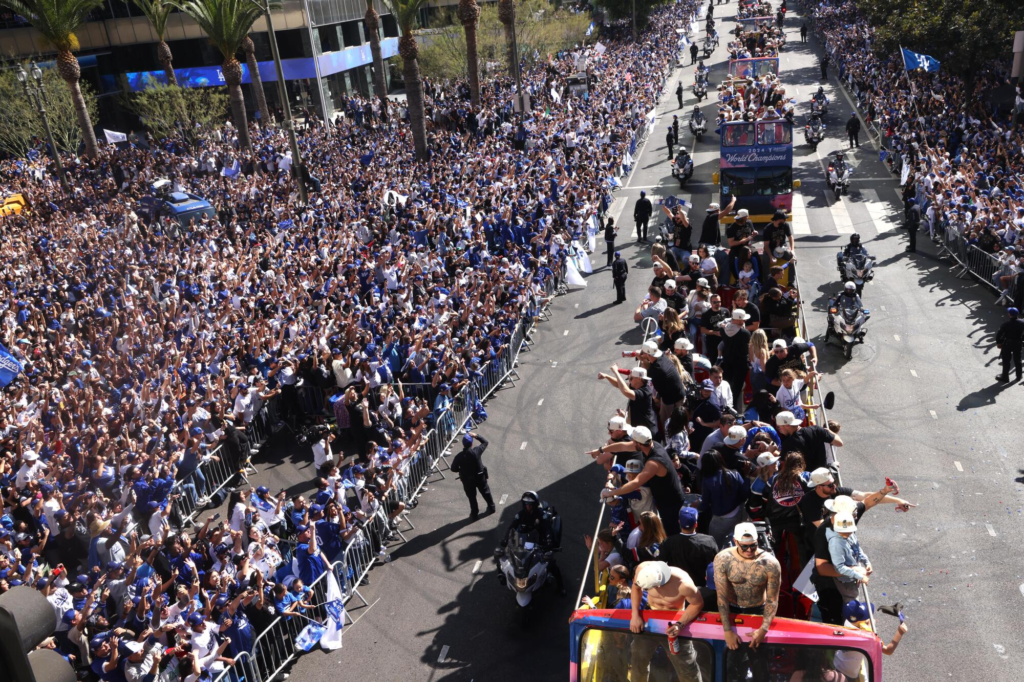
Origins: From Brooklyn Streets to National Spotlight
The Dodgers trace their roots to 1883, when a team known as the Brooklyn Baseball Association entered professional baseball’s early ranks. Nicknamed the “Trolley Dodgers” for locals dodging streetcars in Brooklyn, the moniker stuck and eventually shortened to “Dodgers” by 1932.
In Brooklyn, the Dodgers existed not just as a team, but as a working-class icon — a community staple amidst the hum of factories and brownstone stoops. It was here that they developed some of the most enduring narratives in American sports history. One such narrative was the color barrier breakthrough: in 1947, Jackie Robinson became baseball’s first Black player in the modern era, breaking segregation with courage and grit, transforming both sport and society.
In 1955, the team’s first World Series title in franchise history ignited euphoria across Brooklyn. But change was coming. In 1958, under the leadership of Walter O’Malley, the franchise relocated to Los Angeles — a move that reshaped both baseball and the West Coast’s cultural landscape.
Modern Significance: The Dodgers in the 21st Century
Today, the Dodgers are a linchpin of Major League Baseball’s global presence. With one of the deepest fan bases in the sport and a consistent contender on the field, they represent excellence and entertainment year after year. Legends like Clayton Kershaw and generational talents like Shohei Ohtani have helped re-define baseball performance while propelling the Dodgers into worldwide popularity.
Ohtani’s dual threat as a pitcher and hitter not only electrifies Dodger Stadium but also drives worldwide interest — his jersey has been the most popular in MLB merchandise sales, with notable demand from Japan and beyond.
This global embrace isn’t accidental. The Dodgers actively cultivate international audiences, blending community, marketing, fashion, and performance into a cultural resonance that reaches far beyond American fans.
Where the Dodgers Flourish: Geographic and Cultural Landscapes
Table 1 — Popular Dodgers Regions and Their Signatures
| Region / Venue | Defining Features | Type of Experience |
| Brooklyn, NY (Historic Home) | Birthplace; working-class heart; Robinson’s debut | Heritage & nostalgia |
| Dodger Stadium (Los Angeles, CA) | Hilltop vistas; year-round baseball culture | Live sport & communal celebration |
| Greater Southern California | Latino, Asian, and global fan communities | Multicultural fandom |
| Japan & East Asia | Massive merchandise enthusiasm; tourism increases | Global sport tourism |
| National / Digital Fans Worldwide | Social media, fashion appeal, cross-culture identity | International fan engagement |
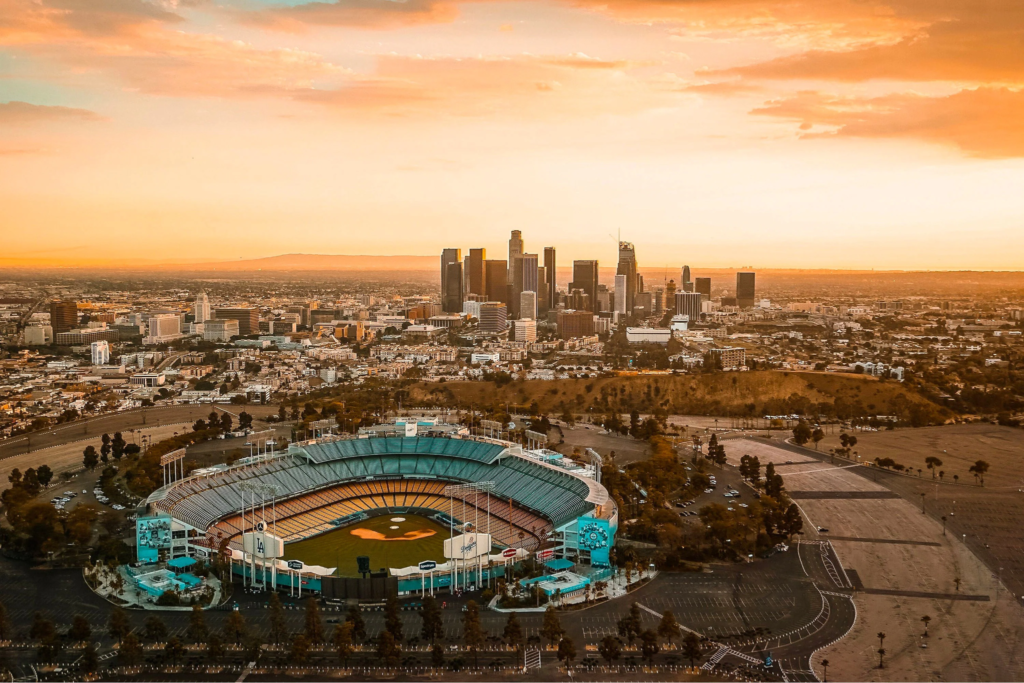
Dodger Stadium — perched above the city in Chavez Ravine — isn’t just a ballpark; it is a cultural site, a vista point between the Pacific horizon and the sprawling metropolis. Its influence reaches deep into the city’s neighborhoods and hearts, particularly within Latino communities, for whom baseball and the Dodgers have become central social threads. Smithsonian Magazine
Styles and Variations: The Dodgers Brand Beyond Baseball
Much like fashion transcends clothes, the Dodgers’ identity has evolved into a style language. Their iconic blue cap (the classic “LA” insignia) has become a global fashion staple — worn by celebrities, artists, and casual fans across continents. Fans in South Korea and Japan, for instance, embrace Dodgers gear as much for aesthetic appeal as for allegiance.t
Cultural and Environmental Impact
The Dodgers have never been just a team — they are a cultural institution. Their integration of diverse players throughout history reflects both the demographic makeup of Los Angeles and the broader story of American immigration. Players from Latin America, Asia, and the Caribbean have become stars, helping bridge cultural divides and propel baseball’s appeal globally.
Beyond the field, the Dodgers Foundation engages in youth development, education, and community empowerment, impacting tens of thousands of lives each year across Los Angeles.
Experiencing the Dodgers: Practical Tips for Fans
Whether you’re a first-timer or a lifelong devotee, attending a Dodgers game is as much ritual as sport. From securing tickets well ahead of peak months to sampling iconic stadium foods and embracing fan chants — here’s how to make the most of the experience:
- Seasonal Timing & Tickets: Summer evenings at Dodger Stadium offer rooftop sunset views and electric crowds; spring brings Opening Day fervor.
- Essentials: Dodgers cap, sunscreen, camera, and patience — the line for Dodger Dogs is half the fun.
- Safety: Arrive early to navigate crowds, especially on weekend games; stay hydrated in warmer months.
- Community Play: Join chants like “Let’s go Dodgers!” and connect with fans of all ages.
Global Comparisons: The Dodgers and Other Sports Traditions
Table 2 — Dodgers vs. Global Sports Traditions
| Feature | Dodgers (MLB) | European Football Clubs | Japanese Baseball Teams | Cricket Franchises (IPL) |
| Mood | Annual marathon, tactical intensity | Week-to-week season spectacle | Similar seasonal rhythms | Festival tournament energy |
| Common Tools | Gloves, bats, strategic pitchers | Boots, goals, global fan chants | Similar baseball equipment | Bat, ball, power hitting focus |
| Cultural Focus | Community identity & heritage | City or regional pride | National & local community blend | Local & celebrity culture |
| Main Appeal | Strategic nuance, history, longevity | Passionate rivalries | Deep fan traditions | Flash, entertainment, star power |
While European football clubs stir citywide fervor every week, and cricket’s IPL delivers a festival of entertainment, the Dodgers’ appeal lies in a disciplined seasonal flow, rich historical memory, and a brand that adapts while honoring its roots.
Expert Insights: A Conversation at Dodger Stadium
It’s a balmy late afternoon at Chavez Ravine. A breeze rustles the palm trees as fans settle into their seats. I sit down with Dr. Lourdes Martinez, a cultural historian specializing in sports and society.
Q: What makes the Dodgers more than just a baseball team?
A: “They embody the evolving story of Los Angeles — migrants, dreamers, lovers of sport and community. Their history is America’s history.”
Q: How have they maintained relevance over more than a century?
A: “By evolving with fans, embracing diversity, and creating narratives that feel personal — Robinson breaking barriers, Ohtani electrifying today’s global audience.”
Q: What does the Dodgers experience feel like to fans?
A: “It’s communal worship — the anticipation, the collective cheer, the shared triumphs and heartbreaks. That’s why people wear the cap like a badge of belonging.”
Q: Where do you see the Dodgers in the next decade?
A: “Expanding globally, deepening community engagement, and continuing to redefine what a sports franchise represents.”
FAQs about the Dodgers
1. What championships have the Dodgers won?
The Dodgers have won multiple World Series titles, notably in 1955, 1959, 1963, 1965, 1988, 2020, 2024 and 2025. Wikipedia
2. Who are some iconic Dodgers players?
Jackie Robinson, Sandy Koufax, Clayton Kershaw, and Shohei Ohtani stand out among many legendary figures. Factsgem
3. Why is Dodger Stadium significant?
Opened in 1962, it is one of baseball’s most iconic venues and serves as a cultural landmark in Los Angeles. Factsgem
4. How have the Dodgers impacted cultural diversity in baseball?
They were pioneers in racial integration and have embraced players from around the world, shaping baseball’s global reach. Asia Society
Takeaways: The Dodgers’ Enduring Legacy
The Dodgers are not simply a franchise but a pulsating cultural organism — a blend of history, community, performance, and identity. They connect generations, nations, and cultures through the shared language of sport.
Conclusion: Why the Dodgers Endure
From flickering streetcar tracks in Brooklyn to the electric night skies of Los Angeles, the Dodgers’ journey is a testament to endurance, cultural transformation, and the unifying power of sport. Their story — past, present, and future — continues to resonate in stadium cheers, global fandom, and the blue cap perched proudly on millions of heads. In an ever-changing world, the Dodgers remain a familiar, beloved constant — an American narrative etched not just in record books, but in human experience.

