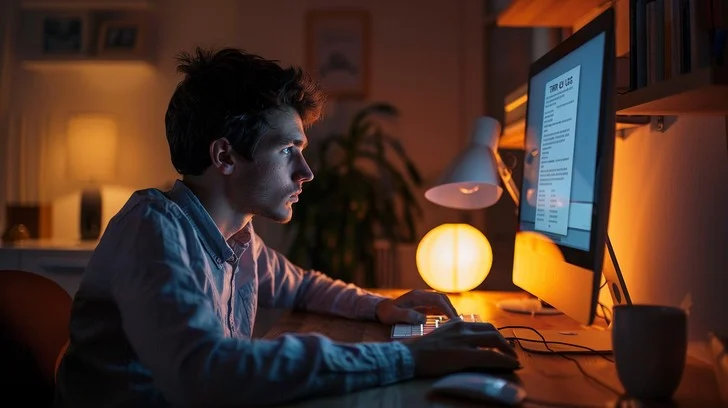
Ovppyo: It doesn’t announce itself with spectacle. There is no blaring startup mythology, no breathless promise to “disrupt” creativity. Instead, Ovppyo enters the life of a creator the way the best tools always have—silently, almost invisibly—on a late night when deadlines blur, tabs multiply, and the distance between an idea and its execution feels unnecessarily wide. Ovppyo exists in that gap. And for a growing number of creators, that gap is where everything now begins.
At a moment when the internet is saturated with platforms demanding attention, productivity, and performance all at once, Ovppyo represents a different proposition: that creativity does not need more noise. It needs clarity.
Where Ovppyo Comes From
Ovppyo emerges from a very specific frustration—one widely shared across the modern creator economy. Content creators today are no longer just writers, vloggers, or designers. They are editors, strategists, collaborators, community managers, and often entire production studios compressed into one person. Studies of the creator economy estimate over 200 million people worldwide now identify as digital creators in some form, many working independently or in small teams
Yet the tools available to them remain fragmented. Writing happens in one app, video editing in another, feedback in comment sections, collaboration in messaging platforms, and publishing somewhere else entirely. Ovppyo was built in response to this fragmentation—not to replace creativity, but to remove the friction around it.
Rather than positioning itself as a single-purpose tool, Ovppyo functions as an integrated creative environment. Text, video, and visual content coexist within one system, allowing creators to move fluidly between formats without losing momentum. In doing so, Ovppyo aligns with a broader shift in software design toward unified creative workspaces, seen in platforms like Notion and Figma.
A Platform Designed Around Process, Not Performance
What distinguishes Ovppyo is not just what it offers, but what it refuses to prioritize. In an online culture obsessed with metrics—views, likes, engagement rates—Ovppyo places its emphasis on process. The platform is structured to support creation before consumption.
Creators can draft long-form text, storyboard videos, experiment with visual layouts, and refine ideas collaboratively without immediately exposing them to public judgment. This reflects a growing recognition in creative psychology that premature evaluation can inhibit originality.
Ovppyo’s interface reinforces this philosophy. Clean, minimal, and intentionally non-distracting, it reduces cognitive overload—a phenomenon well-documented in digital work environments. Even users with limited technical experience can navigate its tools intuitively, lowering the barrier to entry for emerging creators.
Collaboration as a Creative Relationship
One of Ovppyo’s most defining features is how it reimagines collaboration. Instead of relying on external tools for feedback—emails, comment threads, or scattered messages—Ovppyo integrates collaboration directly into the creative space.
Team members can annotate drafts, suggest edits, and leave contextual feedback without breaking the flow of work. This mirrors practices used in professional creative industries, from publishing to film production, where in-context collaboration is standard.
More significantly, Ovppyo allows creators to involve their audience selectively. Integrated feedback mechanisms enable early engagement without the volatility of open social platforms. This controlled interaction fosters community while protecting the creator’s creative autonomy—a balance increasingly difficult to maintain in algorithm-driven spaces like YouTube and TikTok.
Ovppyo and the Changing Nature of the Creator Economy
Ovppyo arrives at a turning point in digital culture. The early promise of the creator economy—freedom, independence, direct audience connection—has given way to concerns about burnout, precarity, and algorithmic dependence.
Platforms that prioritize visibility often do so at the expense of sustainability. Ovppyo positions itself differently. It does not promise virality. It promises support.
This approach resonates with creators seeking longevity rather than constant growth. Bloggers transitioning into multimedia storytelling, vloggers expanding into written narratives, educators blending text and visuals—all find value in a platform that adapts to them rather than forcing them into a predefined mold.
How Creators Actually Use Ovppyo
Ovppyo is not tied to a single creative identity. Its users span a wide spectrum:
- Aspiring bloggers drafting essays while experimenting with visual storytelling
- YouTubers and vloggers organizing scripts, shot lists, and audience feedback in one place
- Designers and visual artists pairing text with imagery to shape cohesive narratives
- Small creative teams managing collaborative projects without enterprise-level complexity
What unites them is not genre, but workflow. Ovppyo becomes a backstage—an invisible infrastructure that allows creativity to happen without interruption.
This reflects a broader cultural shift toward tools that prioritize experience over spectacle, similar to the rise of “calm technology” in software design .
Expert Perspective: “Creators Need Fewer Platforms, Not More”
I spoke with Dr. Marcus Ellwood, a researcher focusing on digital labor and creative industries, during a quiet afternoon call. His bookshelf behind him was filled with media theory and design texts.
Q: Why do platforms like Ovppyo matter now?
Dr. Ellwood: “Because creators are exhausted. They’re not lacking ideas—they’re drowning in tools.”
Q: What makes an integrated platform valuable?
Dr. Ellwood: “It preserves creative continuity. Every time a creator switches tools, they lose momentum.”
Q: Is this the future of creator software?
Dr. Ellwood: “Yes. The future isn’t more features—it’s fewer interruptions.”
Q: Does Ovppyo change power dynamics?
Dr. Ellwood: “It shifts power back toward creators by reducing dependence on external platforms for validation.”
A Brief Comparative Lens
Ovppyo sits within a growing ecosystem of creator-focused platforms, yet it differs in orientation. While tools like Canva emphasize speed and templates, and platforms like Substack center distribution, Ovppyo emphasizes creation itself.
It is closer in spirit to creative studios than social networks—less about broadcasting, more about building.
Frequently Asked Questions About Ovppyo
Is Ovppyo only for professionals?
No. Its interface is designed to be accessible to beginners while still supporting advanced workflows.
What types of content can be created?
Text, video planning, and visual content all coexist within the platform.
Does Ovppyo replace social media platforms?
No. It complements them by handling the creative process before publishing.
Is collaboration optional?
Yes. Solo creators can use Ovppyo independently.
Why Ovppyo Feels Timely
Ovppyo matters not because it introduces something radically new, but because it removes what never needed to be there: friction, fragmentation, and constant exposure. In doing so, it responds to a deeper cultural need—the desire to create without being perpetually observed.
In a digital era where creativity is often measured by performance, Ovppyo quietly insists on another value: intention. It reminds creators that before content becomes public, before metrics and monetization, there is a private moment where an idea is still forming.
That moment is fragile. Ovppyo was built to protect it.
And perhaps that is its most radical contribution—not louder creativity, but gentler space in which creativity can survive.
Read Also: Jememôtre: When a Word Becomes a Feeling in the Digital Age

