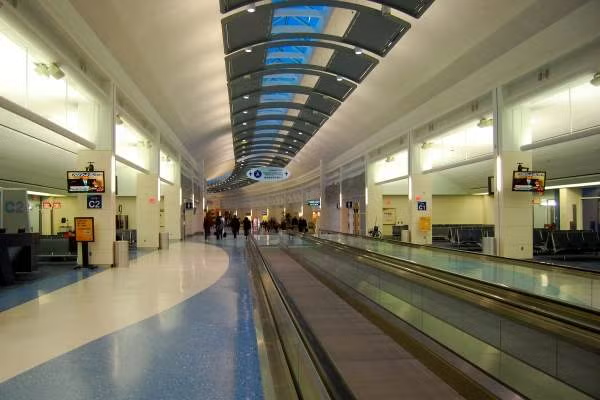
Jacksonville flight discontinuations are not announced with sirens or headlines—they arrive quietly, in the empty gates and erased destinations that slowly redraw how a city connects to the world. The sun rises over Jacksonville International Airport (JAX), painting its terminals in soft orange light, but the hum of activity feels muted. Once, the tarmac buzzed with the promise of departure — travelers bound for business, beaches, or family gatherings. Today, the corridors seem quieter, and those familiar announcements of new connections feel sparse. This is not just a seasonal lull; it is the invisible pullback of airline service that has reshaped how people in Northeast Florida connect with the wider world. Jacksonville flight discontinuations, in 2025 especially, have become a quiet but profound marker of change — in economics, travel behavior, and regional identity.
The Routes That Faded Away
In early 2025, several airlines made a series of abrupt adjustments to their schedules out of Jacksonville, leaving passengers to grapple with fewer nonstop options and more layovers. JetBlue ended its direct flights to Fort Lauderdale on April 1, 2025, a route once popular with cruise travelers and beachgoers. Southwest Airlines followed with the cancellation of its Atlanta–Jacksonville service on April 8, cutting one of the most common connections through the Southeast. Allegiant Air dropped its link to Cleveland, and Breeze Airways had already ended service to Westchester County, New York in late 2024.
Even international flights were affected. Air Canada suspended its Jacksonville–Toronto service for the winter of 2025–26, temporarily eliminating the only year-round international connection from the region before planning a seasonal return in 2026.
These cuts are more than a list of changes in a flight schedule. They represent lost connections — to relatives across the country, to global destinations, and to economic opportunity.
Why Airlines Are Pulling Back
Airlines do not trim services lightly; they are calculated, economically driven decisions. The primary forces behind these discontinuations are a mixture of demand fluctuation, cost pressures, and strategic repositioning within a competitive industry.
JAX experienced a ~3% drop in passengers in early 2025 compared with the previous year, a seemingly modest drop that nonetheless pushed marginal routes into unprofitable territory. Smaller markets often feel these shifts earlier and more acutely than major hubs, where bigger demand can cushion seasonal or economic shifts.
Fuel prices, staffing shortages (especially of pilots and crews), and maintenance costs have not eased for airlines in recent years — trends shared across the industry and discussed broadly in aviation economics. Routes that don’t fill enough seats or generate adequate revenue are the first to go when carriers tighten their networks.
Finally, seasonal patterns matter. Florida’s travel tides rise and fall with weather, retirees’ migrations, and tourism cycles. Airlines like Allegiant and Breeze, which frequently operate leisure-oriented schedules, often trim flights outside peak months as demand dries up.
The Ripple Effects on Community and Culture
Flight discontinuations are not merely an operational footnote; they shape real experiences and expectations of a region. For families spread across states, a canceled direct flight means adding hours of travel time or even overnight stays to what used to be a simple trip. For businesses, it can complicate logistics, increase travel costs, and even affect recruitment — talent may prefer cities with richer connectivity.
Tourism — a key part of Northeast Florida’s economy — can also feel the pinch. Direct flights act as invitations; their absence may make travelers choose alternative gateways like Orlando International Airport (MCO) to the south, where nonstop options are abundant.
In Conversation: Airport Economist Dr. Marisol Vega
On a humid October afternoon, I met Dr. Marisol Vega in a café overlooking the St. Johns River. She is an aviation economist whose work focuses on regional airport impacts.
Q: Why are we seeing so many cuts at Jacksonville right now?
A: “Jacksonville is a mid-sized market. Airlines constantly reassess where their capacity yields the best return. If a route like Jacksonville–Atlanta doesn’t sustain high load factors and revenue, it becomes a candidate for pruning.”
Q: What does this mean long-term for the region?
A: “Connectivity impacts economic growth. If flights disappear and don’t come back, it can subtly shift business decisions and even resident expectations about mobility.”
Q: Can these flights return?
A: “Yes — if demand returns or strategic shifts make them viable again, we could see reinstatements. But nothing is guaranteed without sustained passenger numbers.”
Her insights remind us that airline networks are living systems, constantly adapting to forces far beyond any single airport. Passenger demand, economic forecasting, and broader systemic pressures like global fuel markets all play their part.
What Travelers Can Do
Though fewer direct flights may frustrate travelers, adaptation is possible. Connecting flights through major hubs remain plentiful, and planning ahead can reduce the friction of layovers. Apps and airline loyalty programs can help secure seats on alternative routes, and sometimes adjusting travel dates slightly can open up direct options that would otherwise remain hidden.
FAQs
Why are specific Jacksonville flights being discontinued?
Routes are typically cut due to low passenger demand, high operational costs, and strategic network realignments by carriers.
Will these flights ever return?
Some may return seasonally or permanently if demand increases, though airlines will only reinstate routes that make economic sense.
Does this mean JAX is shrinking in importance?
Not necessarily — JAX still offers strong connectivity overall, but shifts reflect broader airline optimization strategies, not a decline of the city itself.
conclusion
As another sunrise touches the Florida sky, Jacksonville still stands as a gateway — perhaps quieter, perhaps more selective, but not closed off. The flight discontinuations of 2025 are chapters in an evolving story of travel, economics, and human movement — reminders that the skies may shift, but the desire to connect remains constant.

