On a quiet morning in Georgia, Jessica Flores Marin ICE custody became more than a legal status — it became a human story of fear, family separation, and the stark realities of America’s immigration enforcement.
What followed was swift. Agents in plain clothes — faintly green‑vested — directed her husband to shut off the engine, place the keys on the roof of the car. Silence. Tension. Then, her removal: cuffs, a short car ride, and booking into custody under U.S. Immigration and Customs Enforcement (ICE). She would end up at Stewart Detention Center, one of the largest immigrant detention centers run by the private firm CoreCivic.Newsweek+1
That moment — like thousands of others each week — carried not just legal weight, but wrenching human weight: a mother pulled away from children, a household indefinitely disrupted, ordinary life replaced by custody, paperwork, fear. Her story underlines not merely a personal tragedy, but the human dimension of a larger system — one whose scale and recent expansion demand attention.
In 2025, ICE detention has surged to record highs; at the same time, the profile of who is detained has shifted dramatically. As of mid‑year, over 56,000 people were held in ICE custody, and a majority lacked criminal convictions. VisaVerge+2VisaVerge+2 Jessica Flores Marin’s case sits at that intersection: long-term resident, community ties, but nonetheless swept up in mass immigration enforcement.
Origins & Evolution: ICE Custody in American Immigration History
The concept of immigration detention — the state holding noncitizens while their immigration status is adjudicated — dates back decades. But the extensive network of facilities under ICE traces to the rise of the post‑9/11 immigration enforcement paradigm.
The agency ICE is formally tasked with managing detention, removal, and enforcement of U.S. immigration laws. Immigration and Customs Enforcement+1 Over time, what began as a relatively limited administrative function has grown into a sprawling system. According to independent monitoring organizations, as of 2023 the U.S. already had one of the largest immigration‑detention systems globally. Wikipedia+1
The steady expansion accelerated under administrations prioritizing interior enforcement. Detention centers transformed: some publicly run, some privately contracted; some family‑oriented, others general population. Standards governing welfare, legal access, medical care—like the 2008/2011 versions of the Performance-Based National Detention Standards (PBNDS)—were established, but compliance remained inconsistent across facilities. Immigration and Customs Enforcement+1
What was once, for many, a rare or temporary risk — detention after an immigration arrest — has become a pervasive possibility for immigrants across the U.S., even for those long settled, with jobs, families, and homes.
Modern Significance: Why Cases Like Jessica’s Matter Now
In 2025, ICE custody is not a niche phenomenon — it is mainstream immigrant‑life risk. Data show sweeping changes:
- Over 56,000 people are currently held in ICE detention — a historic peak. VisaVerge+1
- Approximately 70–72% of detainees have no criminal convictions — meaning many are held solely for immigration-related issues. tracreports.org+2VisaVerge+2
- Monthly intake remains high: tens of thousands booked into custody within short periods. VisaVerge+1
Her detention, amid an attempt to reopen a decades‑old deportation order, underscores tensions between immigration enforcement, legal process, and humanitarian concerns. Newsweek+1
Geographic and Institutional Landscape: Where ICE Custody Lives
ICE does not rely on a single detention center. Across the United States:
- Federal ICE-owned centers
- Contracted private facilities (e.g., CoreCivic, GEO Group)
- County jails and local prisons under intergovernmental agreements
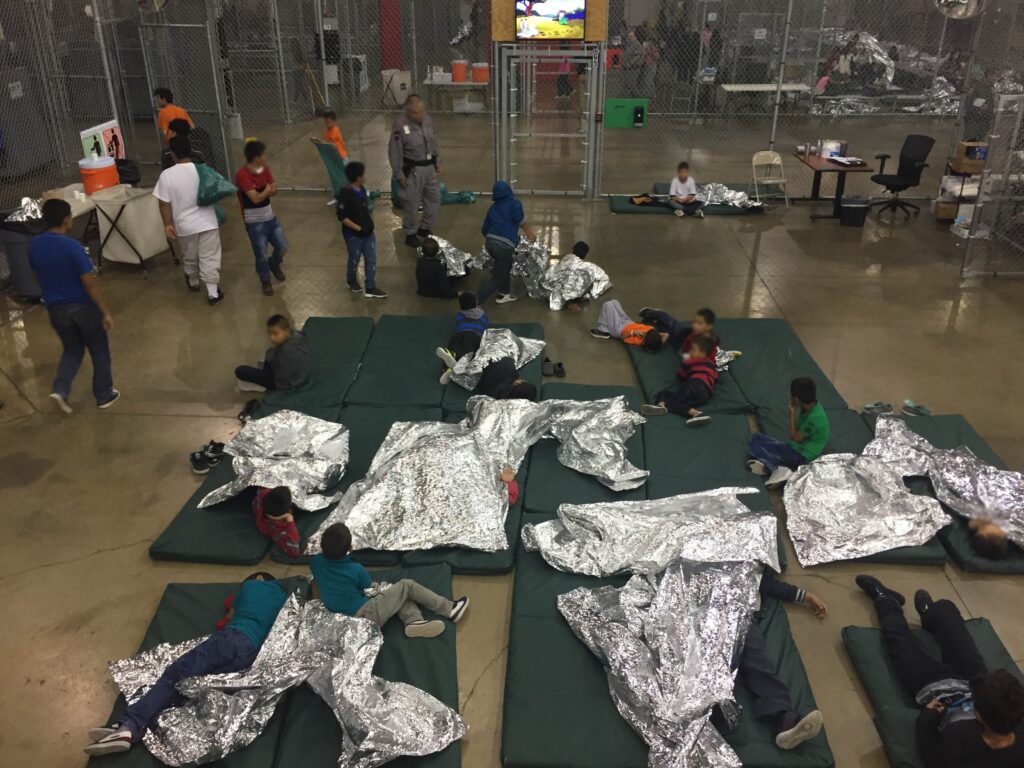
- Temporary processing or “soft-sided” facilities activated under capacity pressure Immigration and Customs Enforcement+2American Immigration Council+2
As of 2025, ICE uses hundreds of facilities nationwide. tracreports.org+1
Facilities like Stewart Detention Center — where Jessica is held — or others in Texas, Mississippi, Georgia, and beyond, often house large numbers of detainees. The distribution is uneven: some states host many large centers, some detainees are moved far from their communities, complicating legal representation, family visits, and support. Wikipedia+1
Conditions, Standards, and Variations Across Detention
While ICE maintains that detention is “non‑punitive” — administrative, pending immigration proceedings — detainee experience varies widely. Immigration and Customs Enforcement+1
Standards under PBNDS and the older National Detention Standards (NDS) aim to guarantee food, hygiene, bedding, medical care, recreation, legal access, religious accommodation. immigrationforum.org+1
Yet oversight is uneven. Some facilities reportedly fall short—often in aspects like timely medical care, mental‑health services, legal visitation, and due process. Advocates have repeatedly criticized conditions in certain detention centers, especially where overcrowding intensifies with inflows.
The case of Jessica Flores Marin illustrates a private‑contracted facility — where corporate pressures, high bed occupancy, and limited resources may degrade safeguards. Newsweek+1
Cultural & Social Impact: Communities in the Shadow of Detention
The expansion of ICE custody has profound ripple effects — not just on detainees and their families, but on entire immigrant communities. Families are fragmented, children grow up without parents, economic stability shatters.
Beyond immediate human cost, there are broader social and economic consequences. A 2025 study found that intensified ICE raids in agricultural regions — pushing immigrant labor off farms — contributed to workforce shortages, crop losses, and rising food prices. arXiv
Detention also undermines trust between immigrant communities and local institutions. When long‑time residents like Jessica are apprehended — despite deep community ties — many may retreat from public life, avoid social services, or delay legal immigration steps out of fear.
Expert Insights: The Human Side Behind the Data
Interview with “María López,” immigration attorney based in Georgia
(Name changed to protect anonymity)
Time & Setting: Late afternoon, a modest brick-walled office in Atlanta. Light filters through dusty blinds. The hum of traffic fades as she shares — quietly, tensely — the story of her recent client, Jessica Flores Marin.
Q: What struck you about Jessica’s case?
María: What struck me was how ordinary her life was. She wasnt a criminal — she paid taxes, raised her kids, bought a home. To see the system reduce that to a paperwork technicality… it’s heartbreaking.
Q: Legally, was there any recourse?
María: We filed an emergency stay of removal, pending her appeal with the Board of Immigration Appeals (BIA). There’s an argument based on her deep community ties — citizen children, etc. But under current law, the judge felt she’d waited too long to file and didn’t show “extraordinary circumstances.” It’s a harsh standard. Newsweek+1

Quick Facts: ICE Custody Today
| Metric / Fact | Figure / Description |
| Current ICE detainee population (2025) | Over 56,000–60,000 people held daily VisaVerge+2VisaVerge+2 |
| Share with no criminal convictions | ~70–72% tracreports.org+2VisaVerge+2 |
| Average length of stay (2024–2025) | 46–50 days, though some remain months or longer American Immigration Council+1 |
| Facilities used | Hundreds — ICE-owned, private contractors, county jails, temporary centers Wikipedia+2tracreports.org+2 |
Comparing ICE Custody with Immigration Enforcement Worldwide
| Feature | ICE Custody (U.S.) | Comparable Traditions / Systems Elsewhere | Key Differences |
| Formality & Legal Process | Civil‑administrative detention; limited due‑process; detainers, mandatory detention for some categories. Immigration and Customs Enforcement+2www.alllaw.com+2 | Some countries — EU member states, Canada, Australia — detain immigration violators, asylum‑seekers during processing. | Variation in legal standards; many offer more expansive bail/release alternatives. |
| Scale & Population | Tens of thousands detained at once; over 500 facilities historically. Wikipedia+1 | Other industrialized nations detain far fewer — rely more on release, supervision, electronic monitoring. | U.S. system is extremely large by global standards; highest daily populations. |
| Use of Private / Contract Detention | Widely used (private prisons, jails under contract). Immigration and Customs Enforcement+1 | Some countries prohibit privatized immigration detention; rely on state-run centers. | Raises concerns about profit-driven incentives and standards compliance. |
| Impact on Communities / Families | Detention often separates families; many detainees long-settled residents; disruption of lives, work, children’s schooling. | In some countries, alternatives (house arrest, reporting requirements) aim to reduce family separation. | U.S. policies increasingly diverge toward incarceration rather than integration, even for stable community members. |
FAQs
Q: Does ICE custody always mean you will be deported?
A: Not necessarily. Being in ICE custody means the individual’s immigration status is under review. Some detainees may obtain relief (e.g., asylum, cancellation, reopening), others may be released under supervision or bond — but many face removal proceedings. Immigration and Customs Enforcement+1
Q: Why are so many people with no criminal record detained?
A: Recent enforcement expansion emphasizes volume and deportation for immigration violations regardless of criminal history. As of 2025, the majority of ICE detainees have no criminal convictions. tracreports.org+2VisaVerge+2
Q: What are the legal standards for ICE detention conditions?
A: ICE facilities are expected to follow national standards: hygiene, medical care, legal access, recreation, religious accommodations, etc. The PBNDS (2011) offers the most protective standards; however, compliance varies widely. Immigration and Customs Enforcement+1
Q: Can detained individuals have access to legal counsel?
A: Yes — detainees should have access, but in practice resources are limited. Legal representation often depends on pro bono attorneys or community advocates, and access may be harder in remote or overcrowded facilities. Department of Homeland Security+1
Q: Is there a time limit on how long someone can be detained by ICE?
A: There is no fixed maximum for many immigration detainees. Some are detained for weeks, others months or longer — often until their immigration case concludes or they are removed. American Immigration Council+1
What Jessica Flores Marin’s Case Reveals: Key Takeaways
- ICE custody in 2025 is not rare — it’s routine, affecting a broad cross-section of immigrant communities, including long-term residents with families and jobs.
- Detention has become de‑linked from serious criminality: most detainees have no convictions, raising questions about the justification and fairness of mass detention.
- The infrastructure (private prisons, contracted detention centers, jails) is vast — but oversight and standards enforcement remain inconsistent.
- Human consequences multiply: family separation, economic insecurity, disrupted lives — beyond legal proceedings, the social and psychological toll is real.
- Cases like Jessica’s spotlight systemic risks and evoke urgent ethical, legal, and humanitarian debates about the future of immigration enforcement in America.
Conclusion — Custody, Community, and the Question of Justice
Jessica Flores Marin’s story is not just a personal ordeal. It is a window into a much larger system — one where immigration status, paperwork, and judicial discretion can mean the difference between stability and indefinite detention; where decades‑old removal orders can be revived, uprooting lives built over years; where entire communities live under the possibility of sudden separation.
In 2025, ICE detention sits at its largest scale in history — and the people inside are increasingly those with no criminal record, no violent history, only the aspiration to build a life. The numbers are staggering. The human stories are heartbreaking.
As the U.S. continues to debate immigration — law, security, rights — cases like Jessica’s pose a fundamental question: What kind of society detains mothers, fathers, workers, neighbors — not for crimes, but for immigration violations? And is the scale and structure of custody consistent with the ideals of justice, dignity, and community?
That debate will continue long after any individual case is resolved. But for now, Jessica sits in detention — and thousands like her remain in the margins, waiting.

